
Bringing a puppy home is exciting, but the first few days are much easier when the essentials are already waiting for you.
You do not need to buy every puppy product you see in a pet store. A few carefully chosen items are enough to make feeding, sleeping, training, playing, and everyday care easier.
The key is to choose things that are safe, practical, washable, and appropriate for your puppy’s size and age.
Start With the Essentials
Before your puppy arrives, try to have these basic items ready:
- food and water bowls
- puppy food
- a comfortable bed or sleeping area
- collar and leash
- appropriate chew and play toys
- waste bags
- cleaning supplies
- grooming essentials
- a safe way to transport your puppy
You may also need training pads, a crate, baby gates, or other items depending on your home and your puppy’s needs.
You do not have to buy everything at once. Start with the things your puppy will use every day and add other items as you learn what works best.
For advice on choosing puppy food, see our guide on How to Choose the Right Food for Your Puppy.
Food and Water Bowls
Food and water bowls are among the first things your puppy will need.
Look for bowls that are:
- easy to clean,
- stable enough that your puppy cannot easily knock them over,
- appropriately sized for your puppy,
- made from a durable, pet-safe material.
Stainless steel is a practical option because it is durable and easy to clean. Ceramic bowls can also work well if they are made for pet use and are not cracked or damaged.
There is no need to buy an oversized bowl for a small puppy. Choose a size that makes eating and drinking comfortable without allowing the puppy to climb into it.
Puppy Food
Your puppy will need an appropriate diet from the first day at home.
Choose a complete and balanced food formulated for growth and appropriate for your puppy’s expected adult size. Large-breed puppies, for example, have different nutritional considerations from small breeds.
Avoid changing your puppy's food repeatedly simply because another product looks more attractive on the shelf.
If you need to change the food your puppy was eating before coming home, a gradual transition is generally easier on the digestive system.
A Comfortable Sleeping Area
Your puppy needs a quiet place where it can rest undisturbed.
A puppy bed does not have to be expensive. The most important qualities are comfort, appropriate size, durability, and easy cleaning.
A washable cover is particularly useful because accidents are common during the first weeks.
You can also provide a crate or another safe sleeping area if you plan to crate-train your puppy. The space should allow the puppy to stand, turn around, lie down, and rest comfortably.
Do not be surprised if your puppy ignores the new bed at first and chooses a completely different sleeping spot. Puppies often need time to settle into a new home.
Collar, Leash, and Identification
A properly fitted collar and a lightweight leash are useful from the beginning.
The collar should fit securely without being too tight. You should be able to comfortably fit a couple of fingers between the collar and your puppy’s neck, while making sure the puppy cannot easily slip out of it.
Identification is also important. Depending on your circumstances, this may include an ID tag and a microchip.
The American Veterinary Medical Association recommends microchipping as a reliable way to help reunite lost pets with their owners.
If your puppy is very young or still completing vaccinations, ask your veterinarian where and when it is appropriate to take your puppy outside.
Chew and Play Toys
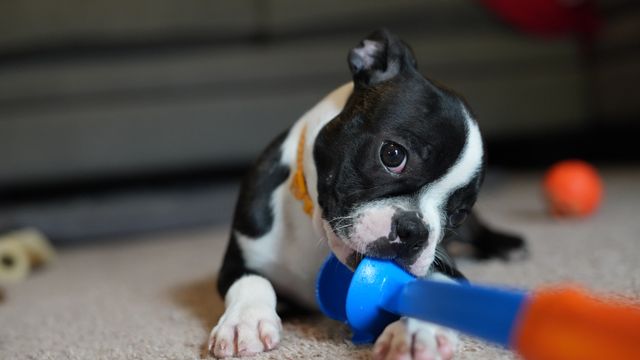
Puppies explore the world with their mouths, so appropriate toys can be useful for play and chewing.
Choose toys that:
- are appropriate for your puppy’s size,
- do not contain easily detachable small parts,
- are durable enough for your puppy’s chewing style,
- can be inspected and replaced when damaged.
No toy is completely indestructible. Supervise your puppy with unfamiliar toys and remove anything that becomes broken or develops loose pieces.
You do not need a huge collection. A few different toys that encourage chewing, playing, and interaction are enough to start.
Grooming Supplies
The grooming items you need depend on your puppy’s coat.
Basic supplies may include:
- a puppy-appropriate brush or comb,
- dog shampoo,
- nail clippers or a suitable nail tool,
- a towel,
- a toothbrush and dog-safe toothpaste.
You do not necessarily need all of these immediately. For example, the right brush for a short-haired puppy may be completely different from the one needed for a long or curly coat.
Start handling your puppy gently around the paws, ears, mouth, and body so grooming becomes a normal part of life rather than something unfamiliar later.
Potty Training Supplies
If you are house-training your puppy, accidents are part of the process.
You may want to keep:
- absorbent training pads if they suit your training method,
- paper towels,
- an enzymatic pet-safe cleaner,
- waste bags.
Training pads can be useful in some situations, particularly for very young puppies or certain living arrangements, but they are not essential for every household.
An appropriate cleaning product is often more important. If an accident happens indoors, clean the area thoroughly so lingering odors do not encourage the puppy to return to the same spot.
A Safe Way to Travel
You will need a safe way to bring your puppy home and transport it for future veterinary visits.
Depending on the puppy’s size and your vehicle, this might be a properly secured travel crate or another suitable restraint system.
Never allow a puppy to travel loose in a vehicle. A frightened puppy can move around the car, interfere with the driver, or be injured during sudden braking.
A small blanket or towel that smells familiar can also make the first journey less stressful.
Puppy-Proofing Is Just as Important as Shopping
Buying supplies is only part of preparing for a puppy.
Before your new dog arrives, look around your home from a puppy’s point of view.
Keep electrical cords, medications, cleaning products, small objects, and potentially dangerous foods out of reach. Secure anything that could be knocked over or chewed.
Think about plants, balconies, stairs, rubbish bins, and other areas that could present a risk.
For more practical advice, visit our Puppy Care guides.
A Simple Way to Prepare
Instead of trying to buy everything in one shopping trip, divide your preparation into three groups.
Before your puppy arrives:
Food, bowls, sleeping area, collar, leash, identification, a few toys, cleaning supplies, and a safe way to travel.
Later:
Larger equipment, replacement items, and products suited to your puppy as it grows.
This approach keeps preparation manageable and gives you the flexibility to adapt.
The Goal Is a Safe, Comfortable Start
Preparing for a puppy is not about having every possible product.
The most important things are a safe home, appropriate food, somewhere comfortable to sleep, basic walking and identification equipment, suitable toys, and the time and patience needed to help your puppy settle in.
Choose products based on your puppy’s size, age, coat, chewing habits, and lifestyle rather than simply buying whatever is marketed as a “must-have.”
FAQ
What do I need before bringing a puppy home?
Start with food, bowls, a sleeping area, collar and leash, identification, a few appropriate toys, cleaning supplies, and a safe way to transport your puppy.
Do I need a puppy starter kit?
No. A starter kit can be convenient, but buying individual items allows you to choose products that actually suit your puppy.
How many toys should I buy for a new puppy?
A few safe toys with different purposes are enough to start. You can add more later depending on what your puppy enjoys.
Do I need training pads?
Not necessarily. They can be useful in some homes and training situations, but they are not essential for every puppy.
What should I look for in a puppy bed?
Choose a bed that is comfortable, appropriately sized, durable, and easy to wash. A removable, washable cover is especially practical during puppyhood.
What should I puppy-proof before bringing the puppy home?
Secure anything the puppy could chew, swallow, knock over, or otherwise get into, including electrical cords, medications, cleaning products, rubbish, small objects, and potentially dangerous foods.