If your puppy is chewing shoes, furniture, your hands, or almost anything else within reach, you are not alone. Chewing is a normal part of puppy development, and teething can make the urge even stronger. Puppies explore their surroundings with their mouths and often chew to relieve discomfort as their adult teeth come in.
The goal is not to stop your puppy from chewing. It is to teach your puppy what is appropriate to chew and provide suitable alternatives.
Why Puppies Chew So Much
Puppies naturally investigate objects with their mouths. During teething, chewing can also help relieve sore gums.
This is why a puppy may happily ignore its toys and go straight for:
- shoes and socks,
- furniture,
- electrical cords,
- children's toys,
- hands and feet.
Providing appropriate chew toys can help redirect this natural behavior, but a toy alone will not teach a puppy what is off-limits.
Choose the Right Toy Size
Size is one of the most important things to consider.
A toy should be large enough that your puppy cannot swallow it or get it lodged in the throat. At the same time, it should not be so large that the puppy cannot comfortably pick it up and chew it.
The correct size also depends on your puppy's breed, jaw size, and chewing style.
Be especially careful with balls and other small toys. A toy that looks harmless can become a choking hazard if a puppy can fit the whole thing into its mouth.
Look for Some Flexibility
Very hard does not automatically mean safer or better.
Veterinary guidance warns against extremely hard objects such as bones, antlers, and some very hard nylon chews because they can damage or fracture developing teeth. A useful general principle is to avoid giving a puppy something so hard that it cannot give or bend at all.
For puppies, look for toys designed specifically for their age and chewing needs rather than choosing the toughest toy available.
Rubber Teething Toys
Rubber toys can be a useful option for puppies because they are available in different shapes and textures and some are designed to be stuffed with food.
A suitable rubber toy can provide something safe to focus on when your puppy feels the need to chew.
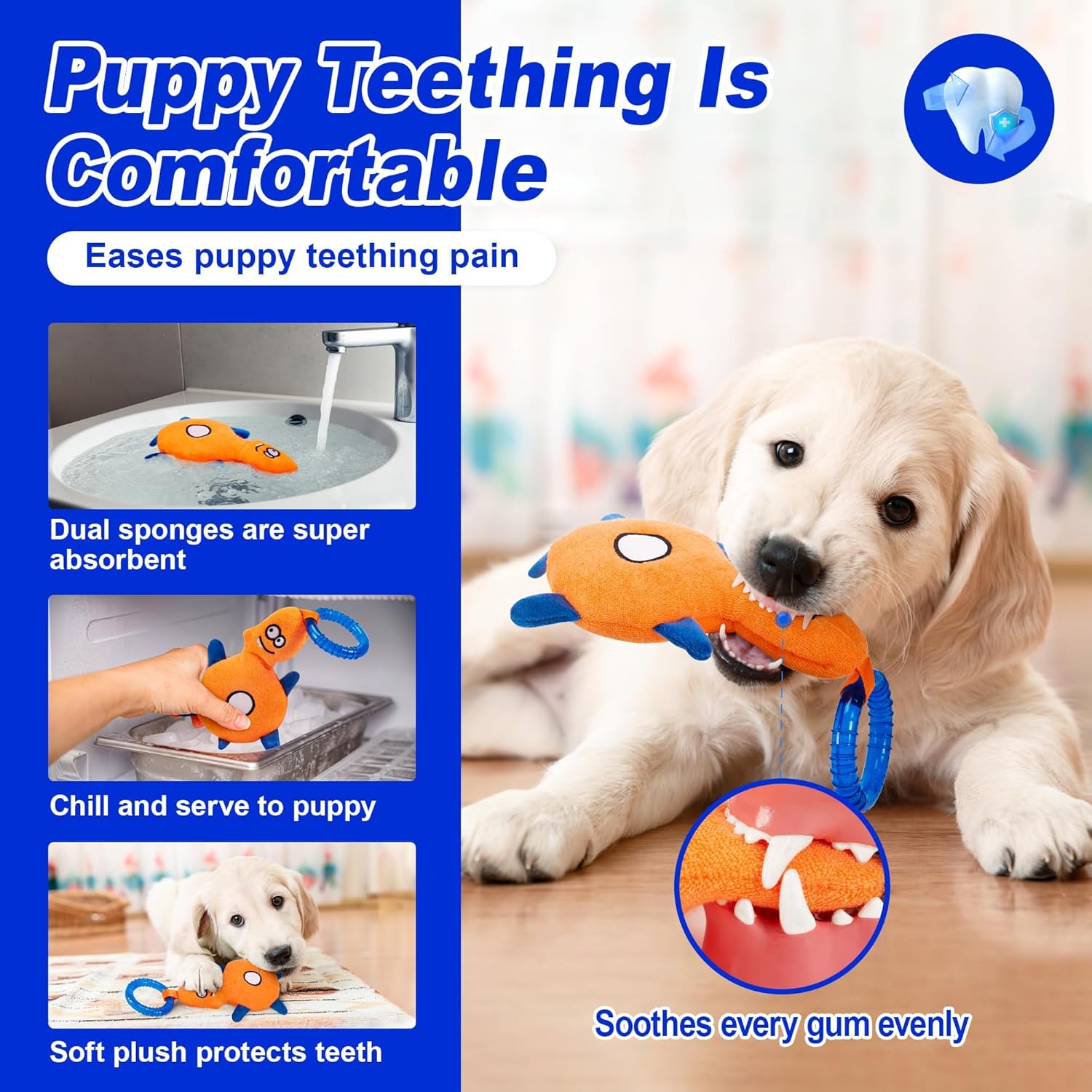
Some toys can also be chilled or frozen according to the manufacturer's instructions. Cold can provide additional relief for sore gums during teething.
Choose a puppy-appropriate size and inspect the toy regularly for damage.

Rope Toys
Rope toys can be useful for interactive games such as gentle tugging and can give puppies another texture to explore.
However, they should not automatically be considered dental-care products. If the fibers begin coming loose, the toy should be removed because a puppy may swallow pieces of the material.
Rope toys are best used when you can supervise the interaction rather than leaving a damaged or heavily frayed toy available.
Cooling Toys for Teething
Some puppy toys are designed to be chilled or frozen to provide a cold surface for sore gums.
These can be useful during the teething period, but always follow the manufacturer's instructions. The toy should still be the appropriate size and condition for your puppy.
You can also ask your veterinarian about suitable options if your puppy seems particularly uncomfortable during teething.
What to Avoid
Choosing a puppy chew toy is also about knowing what not to give.
Avoid toys or chews that:
- are small enough to swallow,
- become sharp when broken,
- shed pieces that your puppy can swallow,
- are extremely hard,
- have small detachable parts,
- are badly damaged or falling apart.
Bones and antlers deserve particular caution because their hardness can damage teeth, while broken pieces can create additional risks.
Always Supervise Chewing
Even a toy marketed as safe for puppies is not completely risk-free.
Stay nearby while your puppy uses a new chew toy and watch how it behaves. Some puppies gently gnaw toys, while others immediately try to tear them apart.
Check toys regularly for:
- cracks,
- deep punctures,
- loose pieces,
- missing chunks,
- loose threads or stuffing.
If part of the toy has broken off, replace it rather than hoping it will still be safe. Veterinary guidance recommends supervising puppies even with recommended chew toys because no toy is completely safe.
Rotate Toys Instead of Buying Dozens
Your puppy does not need a huge pile of toys.
Keep a few appropriate options available and rotate them every few days. A toy that disappears for a while may become interesting again when it returns.
You can also offer different types of play:
- a chew toy for quiet chewing,
- a soft toy for supervised play,
- an interactive toy for playing together,
- a food-stuffable toy for mental stimulation.
This gives your puppy variety without filling your home with dozens of toys.
Redirect Chewing Instead of Punishing It
If your puppy grabs a shoe or starts chewing furniture, simply taking the object away is not enough.
Offer an appropriate toy instead and praise your puppy when they choose it.
Keep a few toys within easy reach so you can redirect the puppy quickly. At the same time, keep shoes, cables, children's toys, and other tempting objects out of reach.
If your puppy bites your hands during play, stop the interaction and redirect the puppy to an appropriate toy. Puppies need to learn that people are not chew toys.
For more information about why puppies chew and bite household objects, read our guide Why Do Puppies Bite Everything?.
When Chewing Becomes a Concern
Chewing itself is normal, but pay attention if your puppy appears to be in significant pain, has persistent mouth bleeding, refuses food, or has difficulty eating.
Also contact your veterinarian if your puppy repeatedly swallows pieces of toys or chews, or if you are unsure which products are appropriate for your puppy.
Every puppy is different, and a veterinarian can help you choose suitable options based on your puppy's age, size, breed, and chewing behavior.
The American Kennel Club also recommends choosing toys according to the puppy's size and activity level and inspecting them regularly for damage.
The Right Toy Is About More Than Durability
The toughest toy is not necessarily the best toy for a puppy.
A good choice should be appropriately sized, suitable for your puppy's age and chewing style, reasonably flexible, and free from easily detachable parts. Most importantly, your puppy should be supervised while using it.
Chewing is a normal part of growing up. Instead of trying to eliminate it, give your puppy safe alternatives and teach them what they are allowed to chew.

FAQ
When do puppies stop chewing everything?
Chewing usually decreases as puppies mature, although adult dogs may continue to enjoy chewing throughout their lives.
Are rubber toys good for teething puppies?
Puppy-appropriate rubber toys can be useful for chewing and some can be chilled or frozen to provide additional comfort during teething.
Are rope toys safe for puppies?
They can be suitable for supervised play, but remove them if the fibers become loose or your puppy starts swallowing pieces.
Should puppies chew bones or antlers?
They are generally not a good choice for puppies because very hard objects can damage developing teeth.