
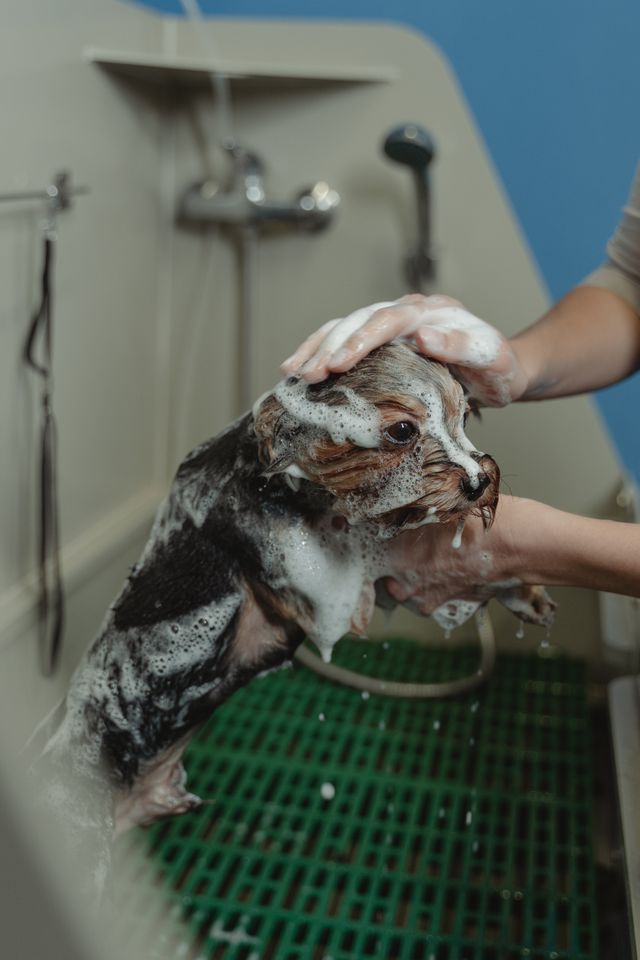
Bathing a puppy sounds simple enough—until you have a wet little dog trying to climb out of the tub.
The good news is that bath time doesn't have to be stressful. Choosing the right shampoo makes a big difference, especially during puppyhood when the skin and coat are still delicate.
A puppy shampoo should clean away dirt without leaving the skin dry, irritated, or uncomfortable. Here's what to look for and how to make bath time easier for your puppy.
Why Do Puppies Need a Special Shampoo?
Puppy skin is sensitive, so a shampoo that is too strong can cause dryness or irritation. Some products also contain heavy fragrances or cleansing ingredients that may be unnecessarily harsh.
A shampoo made for puppies is generally a better choice because it is formulated with their more delicate skin and coat in mind.
Look for a product that is:
- Gentle enough for puppies
- Mild and moisturizing
- Easy to rinse out
- Free from unnecessarily harsh ingredients
- Suitable for your puppy's age and coat
And remember: human shampoo isn't a good substitute for dog shampoo. Human skin and dog skin have different needs, so your puppy is better off with a product made specifically for dogs.
What Should You Look for in a Puppy Shampoo?
There are a lot of puppy shampoos on the market, and the labels can make choosing one confusing.
Instead of focusing only on words like “natural” or “premium,” look at what the product is actually designed to do.
Mild cleansing
A good puppy shampoo should remove dirt and odors without aggressively stripping the coat's natural oils.
Gentle ingredients
If your puppy has easily irritated skin, choose a simple formula and avoid products with strong fragrances or ingredients that have previously caused a reaction.
Puppy-appropriate formula
Check the label to make sure the product is intended for puppies and is appropriate for your puppy's age.
Easy rinsing
This is more important than it sounds. Shampoo left in the coat can irritate the skin, so a formula that rinses away easily can make bath time much easier.
Tear-free claims
Some puppy shampoos are marketed as tear-free. This can be useful around the face, but it doesn't mean shampoo should be allowed to get directly into your puppy's eyes.
Always be careful when washing the face.
Ingredients to Be Careful With
You don't necessarily need a complicated ingredient list to keep your puppy clean.
If your puppy has sensitive skin, you may want to avoid products with:
- Very strong fragrances
- Harsh cleansing agents
- Excessive essential oils
- Ingredients that have previously caused your puppy irritation
If your puppy develops persistent redness, itching, dandruff, sores, or other skin problems, don't simply keep changing shampoos. A veterinarian can help determine whether there is an underlying skin problem.
How Often Should You Bathe a Puppy?
Most puppies don't need frequent baths.
For a healthy puppy, bathing every few weeks or when they are genuinely dirty is often enough. The right frequency depends on your puppy's coat, lifestyle, and individual needs.
For example, a puppy who spends the afternoon running through mud obviously may need a bath sooner than a puppy who has spent the day indoors.
Too much bathing can dry the skin, particularly if you're using a shampoo that isn't very mild.
If your puppy has a skin condition and your veterinarian recommends more frequent bathing, follow their instructions instead.
If you're wondering how often your puppy really needs a bath, it also depends on their coat, lifestyle, and how dirty they get.
How to Make Puppy Bath Time Easier
The shampoo is only part of the experience. Your puppy's first baths can shape how they feel about grooming later in life.
Before you start, gather everything you need so you don't have to leave your puppy alone while reaching for a towel.
You'll need:
- Puppy shampoo
- Lukewarm water
- A soft towel
- A non-slip surface
- A gentle brush
Start slowly. Let your puppy get used to the bathroom and the sound of the water before soaking them completely.
Use lukewarm water, not hot water.
Wet the coat thoroughly, apply a small amount of shampoo, and massage it gently into the coat. Be particularly careful around the eyes, ears, and mouth.
Then rinse very thoroughly.
A little patience here can make a huge difference.
What About Washing a Puppy's Face?
The face needs extra care.
Don't pour water or shampoo directly over your puppy's head. Instead, use a damp cloth to gently clean around the face.
Keep shampoo away from the eyes and inside of the ears.
If your puppy becomes frightened, take a break rather than forcing the bath to continue. The goal isn't just to get the puppy clean—it is also to teach them that grooming is safe.
Don't Forget to Dry Your Puppy Properly
Puppies can get cold quickly when they are wet.
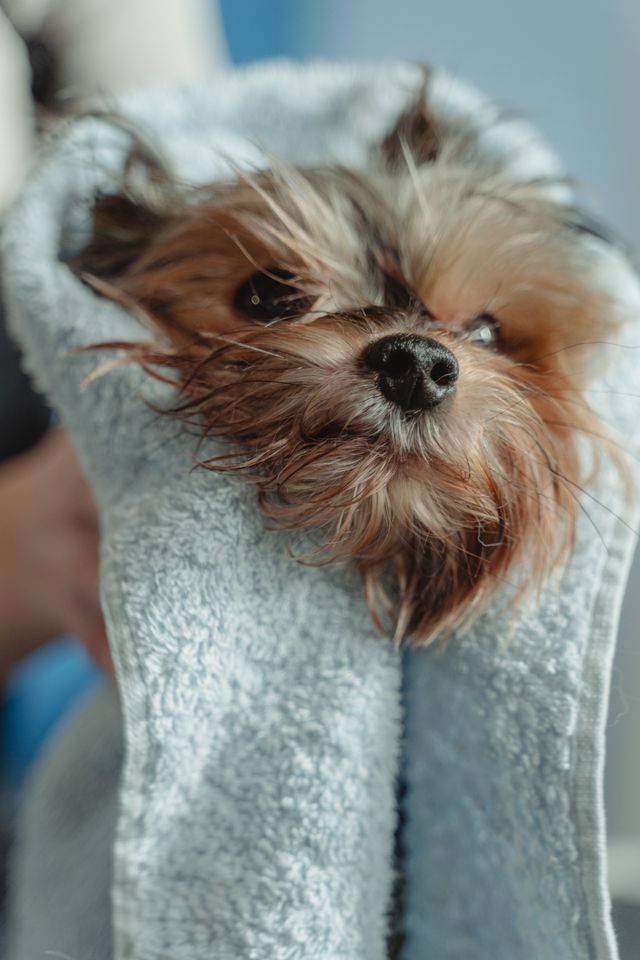
After rinsing, gently squeeze excess water from the coat and wrap your puppy in a soft towel. Pat and dry rather than rubbing aggressively.
Keep your puppy somewhere warm until the coat is completely dry.
If you use a hair dryer, keep it on a low, comfortable setting and introduce the sound gradually. Never use very hot air directly on the skin.
Can You Use Adult Dog Shampoo on a Puppy?
It's better to choose a shampoo specifically formulated for puppies, particularly when your puppy is very young.
Adult dog shampoos can vary considerably in strength and ingredients. A product that works perfectly well for an adult dog may not be the best choice for a puppy's sensitive skin.
When in doubt, check the product's age recommendation or ask your veterinarian.
What If Your Puppy Has Itchy or Sensitive Skin?
Don't assume that itching simply means you need a different shampoo.
Puppies can develop skin irritation for many different reasons, including allergies, parasites, infections, or environmental factors.
If your puppy is scratching frequently, has red skin, develops bald patches, sores, an unusual odor, or keeps getting irritated after baths, it's worth speaking with a veterinarian.
A medicated shampoo may sometimes be recommended—but that is different from choosing a regular everyday puppy shampoo.
If your puppy has persistent itching, redness, sores, or other skin problems, it's best to speak with your veterinarian and follow guidance from a trusted veterinary source such as the American Kennel Club.
A Simple Puppy Bath Routine
You don't need to turn bath time into a complicated process.
Before the bath: Brush the coat and prepare your towel and shampoo.
During the bath: Use lukewarm water, keep movements gentle, and avoid the eyes and ears.
After the bath: Rinse thoroughly, towel dry, and keep your puppy warm.
Most importantly, stay calm. Puppies pick up on our reactions surprisingly quickly.
If your puppy needs a trim, make sure you understand how to safely groom their coat before giving them a bath.
Final Thoughts
The best puppy shampoo isn't necessarily the one with the longest ingredient list or the strongest fragrance.
Look for a mild, puppy-appropriate formula that cleans the coat without unnecessarily drying or irritating the skin. Bath your puppy only when needed, rinse thoroughly, and make the experience as calm as possible.
With a little patience, bath time can become just another normal part of growing up with your puppy.
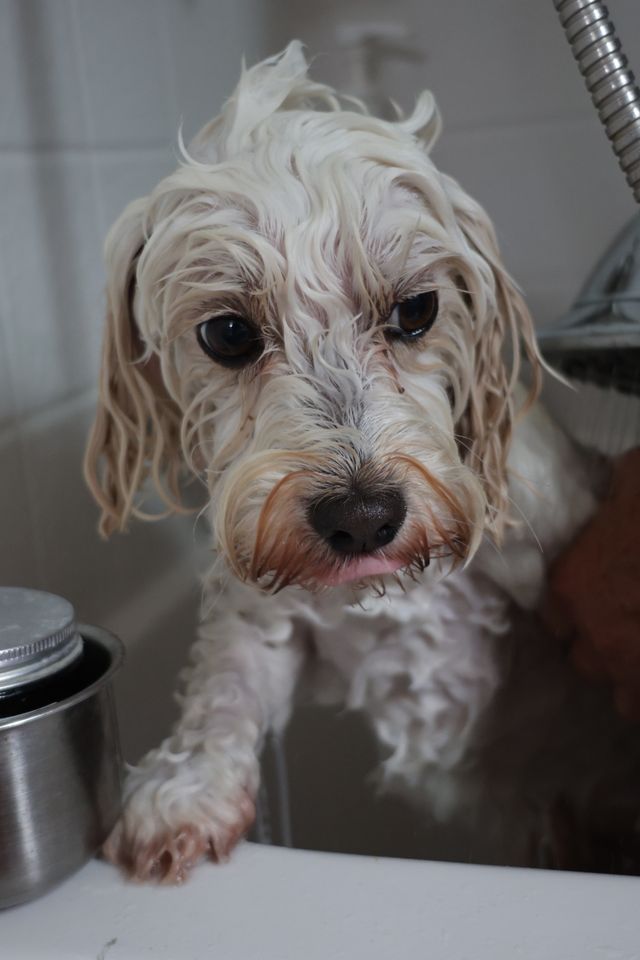
And don't worry if your puppy's first bath is a little chaotic. A wet puppy running around the bathroom is practically a puppy-owner tradition.