
Introducing a leash for the first time can be a strange experience for a puppy. Some puppies immediately start walking, while others freeze, bite the leash, pull away, or simply refuse to move.
That reaction is normal. Your puppy has never felt a leash attached to their collar or harness before, so the goal of the first few sessions is not to teach perfect walking. It is to help your puppy feel comfortable with the leash and learn that wearing it is nothing to worry about.
Watch the First Leash Training
Seeing another puppy experience the leash for the first time can also help you understand how unpredictable those early sessions can be.
Start With the Leash at Home
Before taking your puppy outside, let them investigate the leash in a familiar environment.
Place it on the floor and allow your puppy to sniff it. You can move it gently around them without attaching it. There is no need to force your puppy to interact with it.
When your puppy shows curiosity, offer praise or a small treat. This creates a positive association with the leash.
If your puppy tries to chew it, calmly redirect their attention rather than pulling the leash away.
Attach the Leash Slowly
Once your puppy is comfortable around the leash, attach it to a properly fitted collar or harness.
Stay nearby and let your puppy feel the leash without immediately asking them to walk. Some puppies may look behind them, scratch at the harness, or stand completely still.
Give them time.
You can offer a treat when your puppy takes a few steps while the leash is attached. At this stage, you are simply teaching them that the strange feeling of the leash is followed by something positive.
Let Your Puppy Move Naturally
During the first indoor sessions, avoid pulling your puppy toward you.
Instead, follow them around the room while keeping the leash loose. If your puppy walks toward you on their own, praise them and reward the behavior.
This teaches an important lesson: walking with you is rewarding, while the leash does not have to mean constant pressure.
Once your puppy is comfortable, you can begin encouraging them to follow you for short distances.
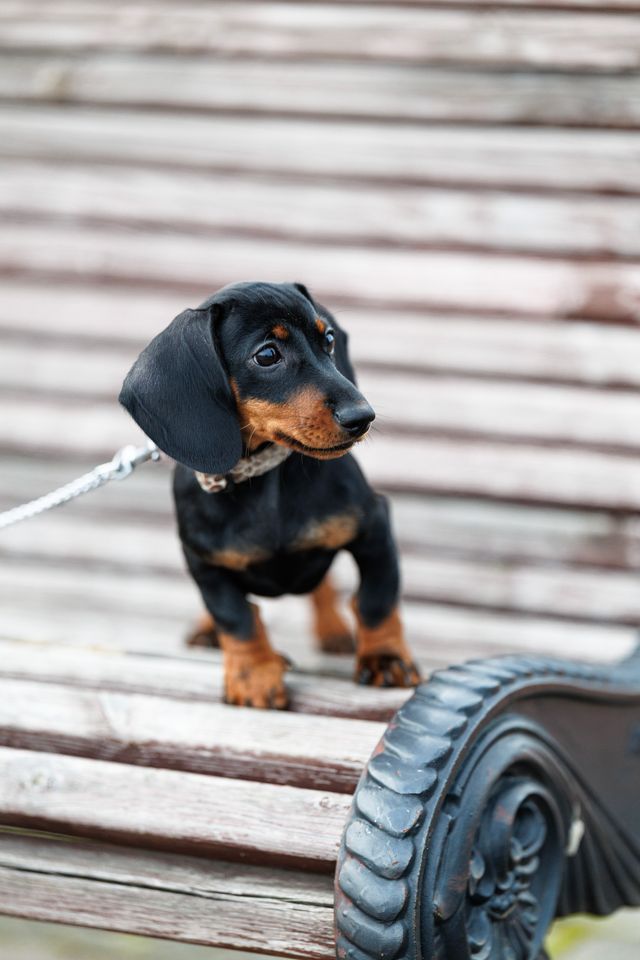
What If Your Puppy Freezes?
Freezing is one of the most common reactions during early leash training.
Your puppy may simply stand still because the leash feels unfamiliar. Do not drag them forward. Pulling can make the experience frightening and may cause your puppy to associate the leash with discomfort.
Instead, crouch down, use a cheerful voice, and encourage your puppy to come toward you. A small treat can help.
Even one or two steps are worth rewarding in the beginning.
With repeated, positive experiences, most puppies become much more comfortable.
What If Your Puppy Bites the Leash?
Puppies naturally investigate objects with their mouths, so biting the leash is not unusual.
Avoid turning it into a game of tug-of-war. If you pull against your puppy, the leash can become even more exciting.
Instead, calmly redirect your puppy toward you or offer a suitable toy or treat. Reward them when they leave the leash alone.
As your puppy learns that walking beside you is more rewarding than chewing the leash, the behavior should gradually decrease.
Keep the First Sessions Short
A puppy does not need a long training session to learn something new.
Start with just a few minutes indoors. End the session while your puppy is still comfortable and interested.
Several short sessions are generally more useful than one long session that leaves your puppy frustrated.
As your puppy becomes confident wearing the leash, gradually increase the amount of time.
Move Outside When Your Puppy Is Ready
Once your puppy is comfortable walking on the leash indoors, you can begin practicing in a quiet outdoor area.
The outside world introduces many new distractions: cars, people, other dogs, smells, sounds, and unfamiliar surfaces.
Don't expect your puppy to walk perfectly straight.
Allow them to stop and investigate safe smells and surroundings. Your goal is to build confidence while teaching your puppy that staying near you is rewarding.
Reward the Behavior You Want
Positive reinforcement can make leash training much easier.
Whenever your puppy:
- walks toward you,
- stays near you,
- looks at you,
- walks with a loose leash,
- ignores distractions, or
- stops pulling,
give them praise or a small reward.
For more guidance on teaching puppies to walk politely on a leash, see this AKC guide to leash training puppies.
You can also use appropriate puppy training treats during training.
The reward does not always have to be food. A cheerful voice, attention, or a short play session can also reinforce good behavior.
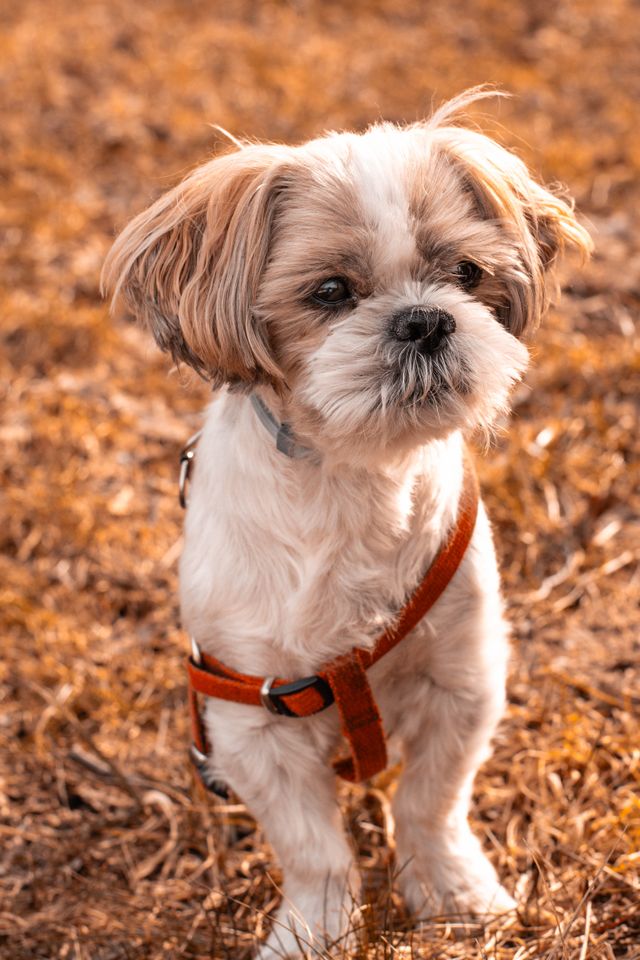
Don't Rush Toward Perfect Leash Walking
The first goal is simply comfort.
Your puppy does not need to master heel position, ignore every distraction, or walk perfectly on the first day.
Leash training is a gradual process. Some puppies adjust within a few sessions, while others need more time.
Patience now can make future walks much easier because your puppy learns to see the leash as a normal part of going outside rather than something uncomfortable or frightening.
FAQ:
When should I start leash training my puppy?
You can begin introducing a leash once your puppy is comfortable wearing a properly fitted collar or harness. Start indoors and keep the first sessions short.
What should I do if my puppy refuses to walk on a leash?
Don't pull your puppy. Give them time, encourage them gently, and reward even a few steps in your direction.
Why does my puppy bite the leash?
Puppies often investigate new objects with their mouths. Calmly redirect their attention and reward them when they stop chewing the leash.
How long should the first leash training session be?
Start with just a few minutes. Several short, positive sessions are better than one long session that leaves your puppy tired or frustrated.
Should I use treats when leash training?
Yes. Small treats can be useful for rewarding your puppy when they walk toward you, stay near you, or walk with a loose leash. You can also use praise and play as rewards.
When can my puppy start walking outside?
That depends on your puppy's vaccination status and your veterinarian's advice. Until your puppy is cleared for public areas, practice leash skills in safe, appropriate environments.
A Calm Start Makes Future Walks Easier
The first leash experience does not need to be perfect. What matters is that your puppy learns to feel safe while wearing the leash and begins to enjoy moving with you.
Keep the sessions short, avoid pulling, reward small successes, and give your puppy time to adjust.
With patience and regular practice, the leash will soon become a familiar part of your puppy's everyday routine.