
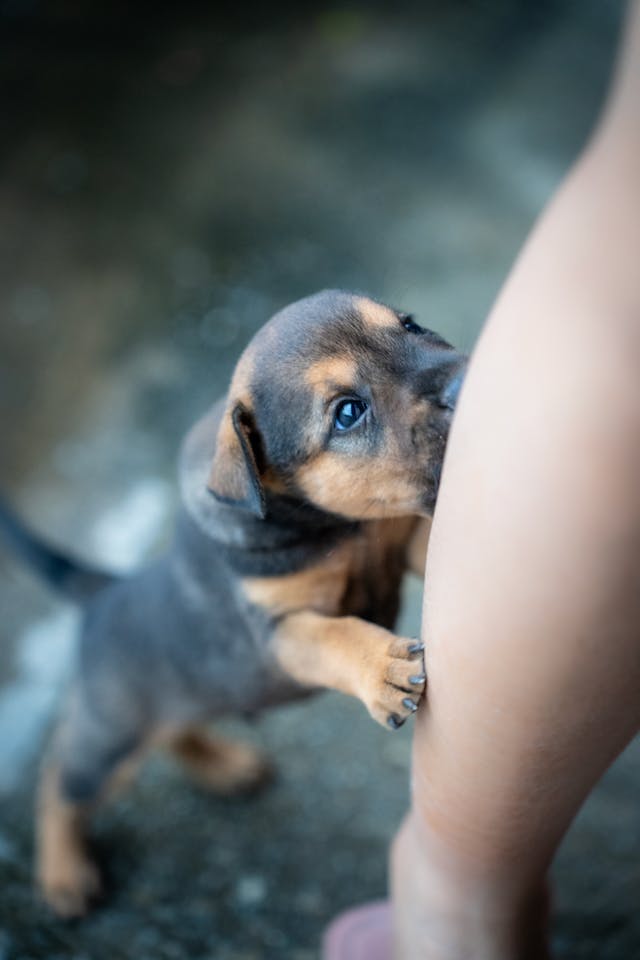
If you’ve ever brought home a puppy, you probably know the feeling. One minute you're cuddling your adorable little furball, and the next minute those tiny razor-sharp teeth are attached to your fingers, socks, or favorite sweatshirt.
Many new puppy owners ask the same question:
How do I stop my puppy from biting?
Also watch the following video:
The good news is that puppy biting is completely normal. The better news is that there are proven ways to reduce it without yelling, punishment, or frustration. The real secret isn't stopping the biting overnight—it's teaching your puppy what they should do instead.
Why Do Puppies Bite So Much?
Before you can solve the problem, it helps to understand why puppies bite in the first place.
Puppies explore the world with their mouths. Just like human babies grab objects with their hands, puppies investigate everything using their teeth.
Common reasons include:
- Teething discomfort
- Curiosity
- Play behavior
- Attention-seeking
- Excess energy
- Overstimulation
- Overtiredness
In most cases, your puppy isn't being aggressive. They're simply doing what puppies naturally do.
Puppy biting is often most intense during key growth stages. Learn what to expect in our guide to puppy development from 3 to 6 months.
The Biggest Mistake Puppy Owners Make
One of the most common mistakes is turning biting into a game.
Waving your hands around, pulling your fingers away quickly, or wrestling with your puppy often makes the behavior more exciting. Many puppies interpret movement as an invitation to continue playing.
Instead of teaching “don't bite,” you may accidentally be teaching:
“Wow! This is fun! Let's do it again!”
The Secret: Redirect, Don't Punish
The most effective approach is simple:
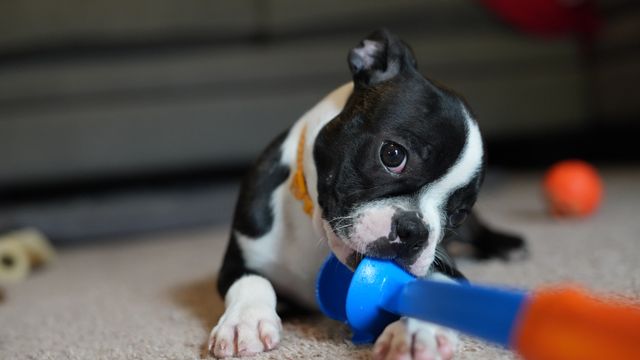
Whenever your puppy bites you, immediately redirect them to something they are allowed to chew.
Keep a toy nearby at all times.
When puppy teeth touch skin:
- Stay calm.
- Stop interacting.
- Offer a chew toy.
- Praise when they choose the toy.
Over time, your puppy learns:
“Humans are not chew toys. This toy is.”
That lesson is much easier for puppies to understand than punishment.
Make Biting End the Fun
Dogs repeat behaviors that get rewarded.
If biting results in attention, movement, excitement, or play, your puppy has every reason to continue.
Instead:
- Freeze briefly.
- Fold your arms.
- Turn away.
- End the game for a few seconds.
Once your puppy calms down, resume play.
Eventually your puppy discovers a valuable lesson:
Biting makes the fun stop.
Is Your Puppy Actually Tired?
Many owners think a biting puppy needs more exercise.
Sometimes the opposite is true.
Overtired puppies often become wild, mouthy, and difficult to manage. They may zoom around the house, grab clothing, and ignore commands.
If your puppy suddenly becomes a little shark:
- Offer water
- Give a potty break
- Create a quiet nap area
- Encourage rest
A short nap can completely change their behavior.
Exercise Matters Too
While overtired puppies bite, under-stimulated puppies bite too.
Puppies need a healthy balance of:
- Physical exercise
- Training sessions
- Socialization
- Mental enrichment
- Rest periods
Short training games are often more effective than long exercise sessions.
A mentally tired puppy is usually a much calmer puppy.
A well-exercised puppy is often a calmer puppy. Discover how play and physical activity support healthy behavior.
Teach Bite Inhibition
Puppies learn bite control from their littermates.
When one puppy bites too hard, the other puppy stops playing.
You can use a similar principle.
If your puppy bites too hard:
- Say “Ouch!” calmly.
- Stop interaction.
- Wait briefly.
- Resume play when calm.
Consistency is more important than volume.
No shouting required.
Avoid These Common Mistakes
Many outdated training methods can make the problem worse.
Avoid:
❌ Hitting your puppy
❌ Holding their mouth shut
❌ Yelling
❌ Rough physical corrections
❌ Punishing in the crate
❌ Playing hand-wrestling games
These methods can create fear, confusion, or even stronger biting habits.
For additional expert advice on puppy mouthing and bite inhibition, visit this training guide from the American Kennel Club.
When Will Puppy Biting Stop?
Most puppies improve significantly between:
- 4–6 months during teething
- 6–8 months with consistent training
- 8–12 months as maturity develops
Every puppy is different.
The key is consistency.
What feels like endless biting today often becomes a distant memory a few months from now.
The secret to stopping puppy biting isn't punishment.
It's teaching your puppy that chewing toys, staying calm, and playing gently are far more rewarding than using human hands as chew toys.
Stay patient.
Stay consistent.
Remember that biting is a normal part of puppy development. With the right guidance, those sharp little puppy teeth will soon be replaced by good manners and a stronger bond between you and your dog.
FAQ
Why does my puppy bite me but not other people?
Your puppy may feel most comfortable around you and see you as their primary play partner.
Should I yell when my puppy bites?
No. Calm redirection and ending attention are usually more effective than yelling.
Is puppy biting a sign of aggression?
Usually not. Most puppy biting is related to play, teething, and exploration.
What age do puppies stop biting?
Many puppies improve significantly between 4 and 8 months, although individual timelines vary.
What is the fastest way to reduce puppy biting?
Consistently redirect biting to toys, stop play immediately when teeth touch skin, and reward calm behavior.