

You know the sound. Your dog walks over to his bed, turns around once or twice, lowers himself onto the cushion—and then lets out a long, audible sigh. Sometimes he closes his eyes immediately. Other times, he looks straight at you as if waiting for something.
So what was that about?
In most cases, a dog sighing when he lies down is nothing to worry about. It can happen as part of normal breathing or when a dog settles into a comfortable resting position. But the same sound can mean something different depending on what happens around it. The important clue isn't the sigh alone. It's the whole picture.
The simplest explanation: your dog is settling into rest
If your dog lies down, relaxes his body and then sighs before going to sleep, there may be nothing more complicated going on.
Dogs naturally take occasional deep breaths, and sighing can occur as a normal respiratory reflex. When a dog is settling down after activity, his breathing may also become slower and deeper. The resulting sound can easily catch an owner's attention because it is much more noticeable than ordinary breathing.
Look at what happens immediately afterward.
If your dog stretches out, rests his head, softens his facial expression and remains comfortably settled, the sigh is probably simply part of winding down. The American Kennel Club notes that sighing can accompany relaxed body language when a dog settles into a resting place.
In other words, you don't need to decode every sigh as a message.
Sometimes a deep breath is just a deep breath.
Why the moment he lies down matters
There is an interesting detail many owners miss: the timing of the sigh can tell you more than the sound itself.
A dog who sighs after finishing a walk and lying on his bed is in a very different situation from a dog who sighs every time he tries to lie down, gets back up, circles repeatedly and tries again.
The first pattern may simply occur during relaxation. The second deserves closer attention because difficulty finding a comfortable position can be associated with pain or physical discomfort. VCA Animal Hospitals lists repeated changes of position, difficulty lying down or getting up, restlessness and reluctance to move among signs that can indicate pain.
This distinction is especially useful with older dogs. A senior dog may still be perfectly happy to nap, but if getting into that comfortable position suddenly takes much longer than it used to, the change itself matters more than the sigh.
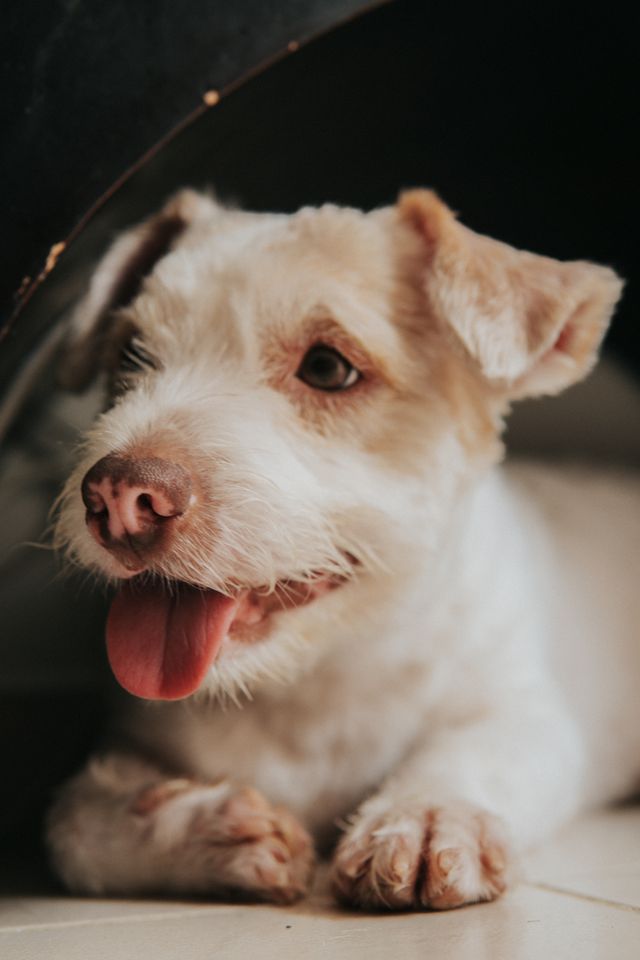
A sigh doesn't automatically mean your dog is happy
This is where things get a little more interesting.
It's tempting to hear a big exhale and assume your dog is saying, “I'm so comfortable.” Sometimes that interpretation fits. But veterinary behaviorists caution against assigning a fixed meaning to a single behavior.
For example, sighing can also occur in situations involving frustration or stress. The context matters: what was happening immediately beforehand, what is the dog's body doing, and what happens after the sigh?
Imagine your dog has been waiting beside you while you work for two hours. He finally lies down and sighs, but keeps watching you, gets up repeatedly and tries to engage you. That is different from a dog who curls up and falls asleep.
If you want to understand your dog's signals more accurately, paying attention to the rest of his body language is far more useful than focusing on one sound.
Dogs communicate in many ways beyond barking, and some behaviors can be surprisingly expressive, as you can see in our article about why dogs howl.
Could your dog be stressed?
Occasionally, yes—but don't assume stress from the sigh alone.
A dog under stress may show several signals together, such as repeated yawning, lip licking, tucked posture, flattened ears, trembling, excessive panting or attempts to move away from whatever is bothering him.
For example, imagine guests have arrived, the room is noisy and your dog finally lies under the table with a deep sigh. If he also keeps his body tense, avoids interaction or repeatedly licks his lips, the sigh deserves to be considered alongside those other signals.
That is much more informative than saying, “He sighed, so he must be anxious.”
Dogs communicate through combinations of behaviors, not a simple dictionary in which every sound has one guaranteed translation.
When a sigh may actually point to discomfort
A sigh by itself isn't considered a typical sign of pain. The concern comes when it appears alongside other changes.
Pay particular attention if your dog:
- struggles to lie down or get up
- repeatedly changes position
- hesitates before using stairs or jumping
- becomes less interested in walks or play
- pants while resting
- seems unusually restless
- whines, groans or vocalizes when moving
- reacts differently when touched
These changes can be more meaningful than the sigh itself. Dogs can also mask pain, which is why gradual changes in everyday behavior are worth noticing.
If your dog suddenly develops difficulty breathing, is gasping, or appears to be working hard to breathe, don't interpret the sound as an ordinary sigh. Breathing difficulty needs prompt veterinary attention.
Watch what happens after the sigh
Here's one of the most useful habits you can develop as a dog owner: watch the next 30 seconds.
Does your dog settle?
Does he fall asleep?
Does his body become loose?
Or does he get back up, pace around, lick his lips, pant or struggle to find a position?
That short window can give you considerably more information than the sigh itself.
It's also useful to notice whether this is a long-standing habit or a new behavior. A dog who has sighed dramatically every evening for years is different from a dog who suddenly starts sighing whenever he lies down.
Sighing can occur in different situations, so the rest of your dog's body language matters too. The American Kennel Club notes that sighing can occur when dogs are relaxed, but context is important.
If you have ever wondered about some of your dog's stranger habits, our guide to why dogs do weird things takes a closer look at these unusual behaviors.
So, should you worry when your dog sighs?
Usually, no—not if the sigh comes as your dog comfortably settles down and there are no other changes in his behavior.
But don't dismiss a new pattern simply because “dogs sigh.” A sigh accompanied by difficulty getting comfortable, reduced activity, unusual vocalization or breathing problems tells a different story.
The most useful question isn't “Why did my dog sigh?”
It's “What else was happening when he sighed—and what did he do next?”
That small shift in how you observe your dog can turn an easy-to-miss behavior into useful information about his comfort and wellbeing.

FAQ
Why does my dog sigh when he lies beside me?
If your dog lies down, relaxes and remains settled afterward, the sigh may simply occur as he transitions into rest. Look at his overall body language rather than interpreting the sigh on its own.
Why does my dog sigh and then get back up?
Repeatedly getting up and lying down can indicate that a dog is having difficulty finding a comfortable position. If this is new or happens frequently, especially in an older dog, discuss it with your veterinarian.
Can dogs sigh because they are bored?
Yes. Sighing can occur in situations involving frustration or boredom, but you need to consider the surrounding behavior. A dog who sighs while repeatedly seeking something to do is giving you more information than the sigh alone.
Is sighing a sign that my dog is in pain?
Not usually by itself. Pain becomes more concerning when sighing occurs alongside difficulty lying down, reluctance to move, restlessness, changes in activity or vocalization.
When should I call the veterinarian?
Contact your veterinarian if the sighing is accompanied by significant changes in movement, behavior, appetite or comfort. Breathing that looks labored, gasping or persistent breathing difficulty requires prompt veterinary attention.