
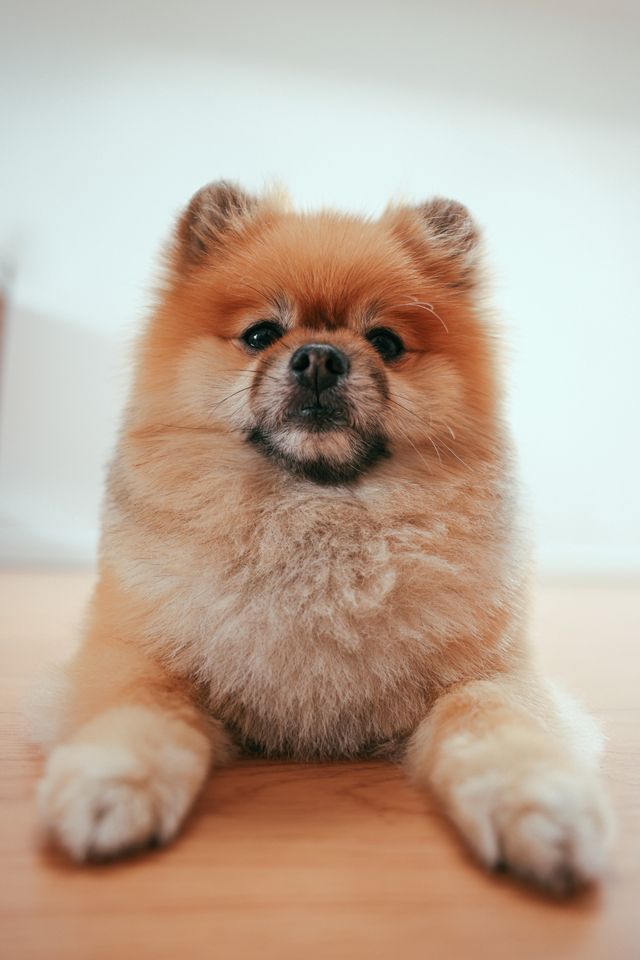
You hear it before you see it: click, click, click across the kitchen floor.
Your dog walks over to you, tail moving, looking perfectly fine. Nothing seems wrong. So why would a few extra millimeters on the nails matter?
The problem is that long nails can affect much more than appearance. They can change the way a dog places its feet, make walking uncomfortable, and increase the chance of a nail breaking. In some cases, an overgrown dewclaw can even curl back into the paw.
Nail trimming is one of those small parts of dog care that is easy to postpone—until there is a reason you wish you hadn't.
Those clicking nails are telling you something
A little noise from the floor does not automatically mean your dog's nails are dangerously long, but persistent clicking is a useful warning sign. The American Kennel Club notes that long nails can interfere with normal gait and make walking awkward or painful.
A dog's nails are not simply hard pieces of keratin. Inside the nail is the quick, which contains blood vessels and nerves. As the nail grows longer, the quick can grow with it. That creates an important problem: if you leave the nails overgrown for a long time, you may not be able to shorten them dramatically in one session without reaching the quick.
This is one reason regular, small trims are easier than waiting until the nails look obviously too long.
Long nails can change how a dog walks
Imagine walking around all day with something pushing against the front of your toes. You would probably adjust the way you stand and move.
Dogs do something similar when their nails repeatedly contact the ground. Long claws can interfere with proper foot placement and, over time, may contribute to changes in the structure of the foot. Veterinary behavior specialists at VCA specifically note that very long claws can interfere with proper foot placement and may cause structural changes in the foot itself.
That does not mean every dog with slightly long nails will develop a serious problem. Activity level, flooring, nail growth and individual anatomy all matter. A dog that regularly walks on pavement may naturally wear its nails more than a mostly indoor dog.
The important point is that natural wear is not always enough.
The dewclaws are easy to forget—and they don't wear themselves down
Here's one of the less obvious problems with nail care: the nails that need the most attention may be the ones you barely notice.
Dewclaws sit higher on the inside of the paw and usually do not touch the ground during normal walking. Because they don't receive the same natural wear as the other nails, they can become surprisingly long.
VCA warns that an overgrown dewclaw can curve around and grow into the paw pad.
So when you check your dog's nails, don't simply look at the four obvious claws touching the floor. Lift each front paw and check the inner side as well. Some dogs also have rear dewclaws.
A broken nail can turn a routine walk into a painful problem
Long nails are also easier to catch on carpet, bedding or other surfaces. When a nail snags and tears, the injury can expose the sensitive tissue inside the claw.
A broken nail can bleed and hurt considerably because the quick contains nerves and blood vessels.
This is why a dog that suddenly starts limping or holding one paw up after running around the house deserves a quick paw inspection. You may find nothing more serious than a damaged nail—but that still deserves attention.
And there is another practical reason to keep nails under control: shorter nails are less likely to catch on things in the first place.
The biggest mistake is trying to take too much off at once
If your dog's nails have been neglected for months, don't look at the entire overgrown length and decide to remove it in one dramatic cut.
That's exactly how owners end up hitting the quick.
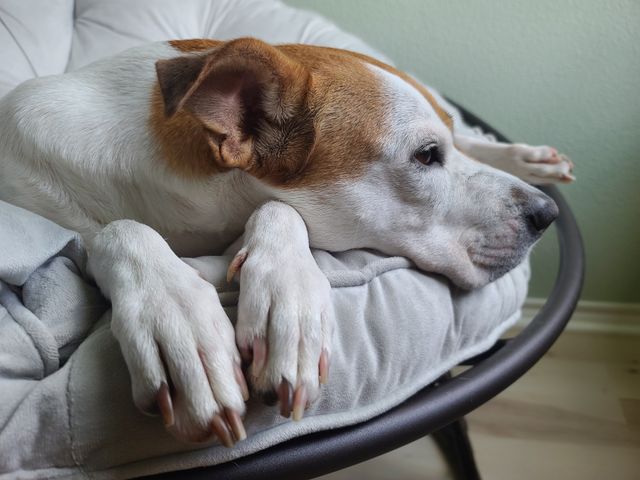
With light-colored nails, the quick is often visible. With dark nails, it is much harder to identify, so veterinary guidance recommends removing only small amounts at a time. VCA advises taking off roughly 1–2 mm per cut when working with dark nails and checking the nail after each small trim.
Regular trimming has another advantage: as the nail is maintained at a shorter length, the quick can gradually recede, making future trims easier.
So if the nails are already very long, think gradual, not aggressive.
Your dog's reaction is useful information
Some dogs act as if nail trimming is the worst thing that has ever happened to them. This video shows just how dramatically their reactions can differ.
And then there are the dogs who take nail trimming very, very personally. 😂
Some dogs pull their paws away because they dislike having their feet handled. Others become tense as soon as the clippers appear.
That reaction should not automatically be interpreted as stubbornness.
For a dog, someone holding a paw, squeezing a toe and bringing a strange tool toward a sensitive nail is an unusual experience. If the process has previously ended with a painful cut, resistance may become even stronger.
Veterinary behavior specialists recommend breaking nail care into small steps: handling the paws, introducing the tool, rewarding calm behavior, and eventually trimming tiny amounts.
You might trim one nail today and stop. That may sound ridiculously slow, but it is far more productive than forcing the entire process and making the next attempt even harder.
The same calm approach can make other grooming tasks easier too. For example, you can see our guide on safely trimming the hair around your dog's eyes and our article about sanitary grooming at home.
What should you actually do at home?
Before trimming, make sure you can clearly see the nail and that your dog is in a stable position. Use equipment designed for dogs, work slowly, and take off only a small amount at a time.
If the nails are dark, be especially conservative. If you accidentally cut the quick, the nail can bleed. Having a clotting product intended for minor nail bleeding available is sensible.
And if your dog is extremely frightened, repeatedly struggles, or you simply cannot see what you're doing, there is no prize for doing the job yourself. A veterinarian or experienced groomer can handle the trim safely and can also show you how to maintain the nails afterward. The American Kennel Club's nail-trimming guide also recommends seeking professional guidance if you're unsure how to do it correctly.
Nail care is really about what happens between trims
The goal isn't perfectly manicured paws.
It is keeping the nails short enough that they don't interfere with normal movement, become painful, or create unnecessary opportunities for injury. Some dogs will need frequent trimming, while others wear their nails down naturally through regular activity.
The useful habit is simple: look at your dog's nails regularly instead of waiting until they become a problem.
That few-second check can tell you far more than the sound of clicking across the floor. And sometimes the smallest grooming task is the one that prevents a much bigger one later.
FAQ
How often should I trim my dog's nails?
There is no single schedule that suits every dog. Growth rate, activity and the surfaces your dog walks on all make a difference. Check the nails regularly and trim when they begin becoming too long rather than relying strictly on a calendar.
Is it normal for a dog's nails to touch the floor?
A dog's nails should not be so long that they interfere with normal foot placement or movement. Persistent clicking on hard floors is a useful reason to inspect them.
What if my dog's nails are already very long?
Don't try to remove the entire excess length at once. The quick may have grown farther down the nail. Small, gradual trims are safer and allow the quick to recede over time.
Why does my dog's dewclaw keep getting so long?
Dewclaws usually do not contact the ground, so they receive little natural wear. They need to be checked separately and may require more frequent trimming.
Should I trim my dog's nails if he is frightened?
Not by force. If your dog becomes highly distressed, stop and work on gradual handling and positive associations, or have a professional help with the trim. A calm, successful session is more useful than forcing all the nails at once.