
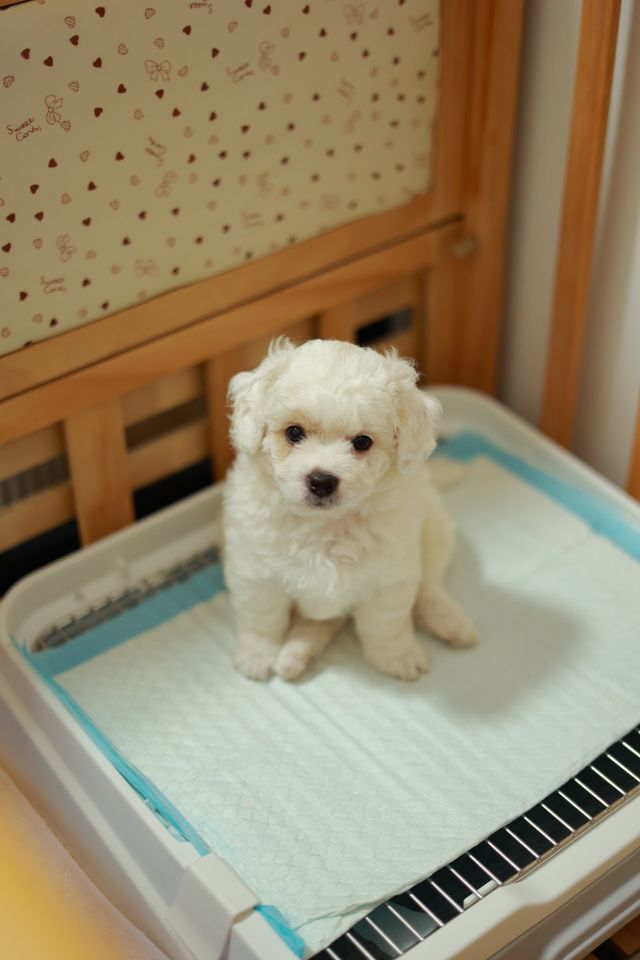
Potty training is one of the first challenges you face when bringing a puppy home. Young puppies have small bladders and are still learning where they should go, so accidents are a normal part of the process.
Puppy training pads can make those first weeks easier. They provide your puppy with a designated indoor place to relieve themselves and can help protect your floors while they are learning.
However, a puppy pad is only a training aid. It works best when combined with a consistent routine, supervision, and positive reinforcement.
What Are Puppy Training Pads?
Puppy training pads are absorbent pads designed to collect urine and, occasionally, feces. Most have several layers: a quick-drying top, an absorbent middle layer, and a waterproof backing.
Some also include odor control or an attractant intended to encourage puppies to use the pad.
The goal is simple: give your puppy a clear, consistent place to go when getting outside is not practical.
Are Puppy Pads Good for Potty Training?
They can be useful, especially for very young puppies, apartment living, nighttime, or situations where getting outside quickly is difficult.
They can also help during the first days after bringing a puppy home, when everything is still unfamiliar.
However, think about your long-term goal. If you want your dog to eventually toilet only outside, puppy pads are best treated as a temporary solution. Some dogs can become accustomed to eliminating indoors, which may make the transition outside take longer.
How to Choose the Right Puppy Pad
You don't necessarily need the most expensive pad. Look for a few practical features.
Size: Choose a pad large enough for your puppy to stand on comfortably with all four paws.
Absorbency: The pad should absorb liquid quickly and keep it away from the surface.
Leak protection: A waterproof backing helps protect floors from moisture.
Stability: If your puppy keeps moving or chewing the pad, a non-slip design or pad holder may help.
Odor control: This can be useful indoors, but it doesn't replace regular changing and cleaning.
Where Should You Put a Puppy Training Pad?
Choose a quiet, easily accessible location where your puppy can reach the pad quickly.
Keep it away from food, water, and the sleeping area. Most importantly, keep the pad in the same place while your puppy is learning.
Moving it around the house can make training confusing.
If you eventually want your puppy to go outside, placing the pad relatively close to the door can make the transition easier later.
How to Teach a Puppy to Use a Training Pad
Timing is one of the most important parts of puppy potty training.
Take your puppy to the pad:
- after waking up,
- after eating or drinking,
- after playing,
- after physical activity,
- before bedtime,
- when they start sniffing or circling.
Stay nearby and give your puppy a chance to use the pad.
When they finish, praise and reward them immediately. The reward should come right after the behavior so your puppy understands what they did correctly.
With repetition, your puppy can begin to recognize the routine.
What If Your Puppy Has an Accident?
Accidents are normal. Do not yell at your puppy or punish them for making a mistake.
Punishment does not teach a puppy where they should go. It can also make them afraid to eliminate in front of you.
Instead, clean the area thoroughly and think about why the accident happened. Perhaps your puppy had been playing, drinking, or sleeping and needed to go sooner than expected.
If accidents happen repeatedly, increase the number of potty opportunities rather than simply expecting your puppy to wait longer.
A good enzymatic cleaner can also help remove lingering odors. If the smell remains, your puppy may return to the same spot.
How Often Should You Change Puppy Pads?
There is no single schedule that works for every puppy.
Some puppies will use a pad more than once, while others will avoid a pad after it has already been used.
Change the pad when it becomes heavily wet or soiled, or when your puppy starts avoiding it.
Keeping the surrounding area clean is just as important. Good hygiene can also help prevent your puppy from developing a preference for another area of the house.
How to Transition From Puppy Pads to Going Outside
If your goal is outdoor potty training, start introducing regular trips outside while your puppy is still using the pad.
As your puppy gets older and develops better bladder control:
- Take them outside more frequently.
- Reward them immediately after they go outside.
- Gradually reduce dependence on the indoor pad.
- Keep the routine consistent.
Don't rush the transition. The goal is to help your puppy understand that going outside is the preferred bathroom routine.
If your puppy is learning to communicate when they need to go, you may also find our guide on how to teach your dog to ask to go outside helpful.
Common Puppy Pad Training Mistakes
A few mistakes can make potty training harder than it needs to be.
Moving the pad constantly: Keep it in one location.
Waiting too long: Watch for signs that your puppy needs to go.
Punishing accidents: Use accidents as information and adjust the routine.
Forgetting to reward success: Praise your puppy immediately after they use the pad correctly.
Giving too much freedom: A young puppy may not be ready to roam around the entire house without supervision.
Puppy Training Pads: Frequently Asked Questions
How long should a puppy use training pads?
There is no fixed age for every puppy. If your goal is outdoor potty training, gradually reduce pad use as your puppy becomes more reliable outside.
Should a puppy pad be near the bed?
It is generally better to keep the sleeping area separate from the bathroom area. Puppies naturally tend to avoid eliminating where they sleep.
Should I punish my puppy for missing the pad?
No. Clean the accident and adjust your routine. Positive reinforcement is much more useful than punishment.
How do I get my puppy to stop using pads?
Increase outdoor potty breaks and reward your puppy immediately after they eliminate outside. Gradually reduce the use of the indoor pad.
A Note About Puppy Hygiene
Potty training is only one part of helping your puppy develop good habits. Puppies also need to become comfortable with everyday grooming and handling.
Bathing should not be done simply because your puppy is being potty trained. How often a puppy actually needs a bath depends on their coat, lifestyle, and how dirty they become. For more guidance, see our article on how often you should bathe a puppy.
Final Thoughts
Puppy training pads can be a useful solution during the early stages of house training, particularly for very young puppies and owners who cannot always get outside quickly.
The pad itself is not what teaches a puppy. Consistency, good timing, supervision, and positive reinforcement are what make potty training successful.
Choose a suitable pad, keep it in one location, watch for your puppy's signals, and reward good behavior immediately.
And if your ultimate goal is outdoor potty training, gradually move from indoor pads to regular outdoor trips as your puppy grows and becomes more reliable.