
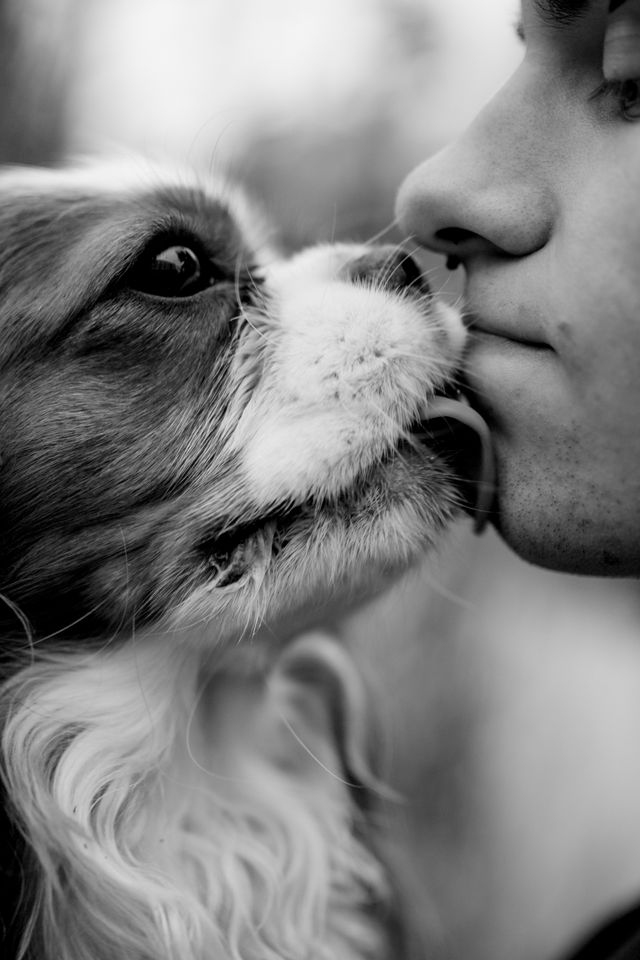
You sit down on the sofa, and within seconds your dog is there—one paw on your leg, nose in your face, and tongue heading straight for your cheek. Move your hand away and the attention may simply shift to your fingers.
So why does your dog lick your hands and face?
It is tempting to translate every lick as a doggy kiss, but the reality is more interesting. Licking is a normal canine behavior with several possible meanings. Your dog may be greeting you, looking for attention, responding to your scent and taste, or simply repeating something that has worked before.
The important part is the situation surrounding the licking. A relaxed dog licking your hand after you come home is very different from a dog that suddenly becomes fixated on licking you or anything else around them.
Your skin actually gives your dog plenty to investigate
One surprisingly simple reason dogs lick people is that we taste interesting.
Human skin contains salt, particularly after sweating. Your hands can also carry traces of food, lotion, or other scents your dog finds interesting. This may explain why a dog that rarely licks your face suddenly becomes very interested after you've been cooking or eating.
There is another reason the behavior makes sense. Dogs experience the world through an exceptionally strong sense of smell, but taste also provides information. Licking gives them another way to investigate what is on their environment—or, in this case, on you.
That means a lick doesn't necessarily carry an emotional message. Sometimes your dog may simply be investigating.
Face licking has roots in puppy behavior
The face is a particularly interesting target because licking around the mouth is part of the social behavior dogs develop early in life.
Puppies may lick around their mother's mouth during interactions with her. This behavior is associated with early feeding and social communication, and some elements of those puppy behaviors can persist into adulthood.
That doesn't mean your adult dog is literally treating you like another dog or asking you for food. It means that face licking has a long history as part of canine social behavior.
As the American Kennel Club explains, licking can have several functions, including communication, attention seeking, and responding to the taste of human skin.
So when your dog aims directly for your face, there may be more going on than simple affection.
Sometimes the real reward is your reaction
Think about what happens immediately after your dog licks your hand.
You might laugh. You might talk to them. You might stroke their head. You might push them away while saying, “Stop!”
From your dog's point of view, all of those reactions are still attention.
This is one of the easiest ways for licking to become a habit. If licking reliably produces interaction, your dog may learn that licking is an effective way to start a conversation with you.
This is particularly noticeable when you're working at a computer or watching television. A dog that wants attention may begin with a nose against your arm, followed by a few licks. If that gets you to look down, the behavior has achieved its purpose.
Interestingly, even telling a dog off can accidentally reinforce the behavior if the dog enjoys the interaction.
A lick can also tell you to look at the bigger picture
Not every lick is a sign that your dog feels relaxed.
Context matters.
A dog that approaches you with a loose body, relaxed face and normal behavior is giving you very different information from a dog that is tense, repeatedly licking their lips, avoiding eye contact or trying to move away.
Dogs sometimes use licking and other displacement behaviors when they are uncomfortable or stressed. That's why it's better to watch the entire body rather than interpreting one tongue movement on its own.
If you're learning to recognize these subtle signals, you may also find our article Why Does My Puppy Follow Me Everywhere? useful. It looks at how proximity, curiosity and attachment can appear in everyday puppy behavior.
Why does your dog lick your hands more than your face?
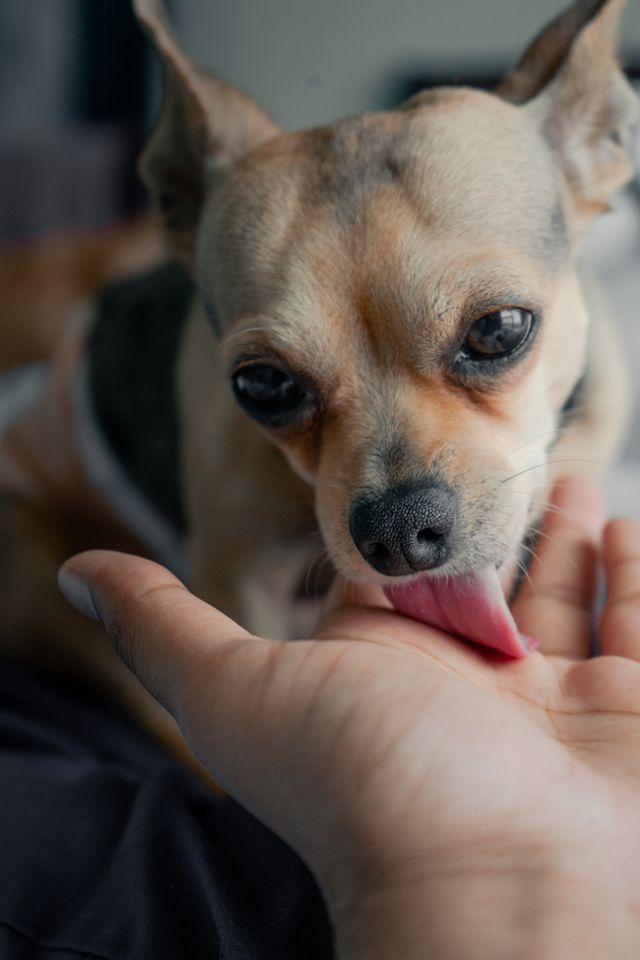
Hands are an especially convenient target.
They move. They smell like whatever you've touched. They may carry food scents. And, most importantly, hands are usually the part of your body that interacts directly with your dog.
You use your hands to feed, pet, train, open doors, throw toys and put on a leash. Your dog has learned that hands are important.
There is also a practical difference between a hand and a face. If your dog licks your hand, you can easily move it away. A face is much more personal, which is why some dogs quickly learn that face licking produces a particularly strong human reaction.
What if you don't want your dog licking you?
You don't have to allow licking just because it is normal canine behavior.
If you dislike it, avoid turning the moment into a wrestling match. Calmly move your face or hand away and redirect your dog toward another activity. You can ask for a simple behavior such as sitting, then reward that behavior with attention.
The same principle used for puppy mouthing can be useful here: rather than focusing only on what you don't want, teach your dog what to do instead. Our guide The Secret to Stopping Puppy Biting explains this redirection approach in more detail.
Consistency matters. If licking earns enthusiastic attention on Monday but is discouraged on Tuesday, your dog has little reason to stop trying.
Should you let your dog lick your face?
This is where personal preference and hygiene are worth separating.
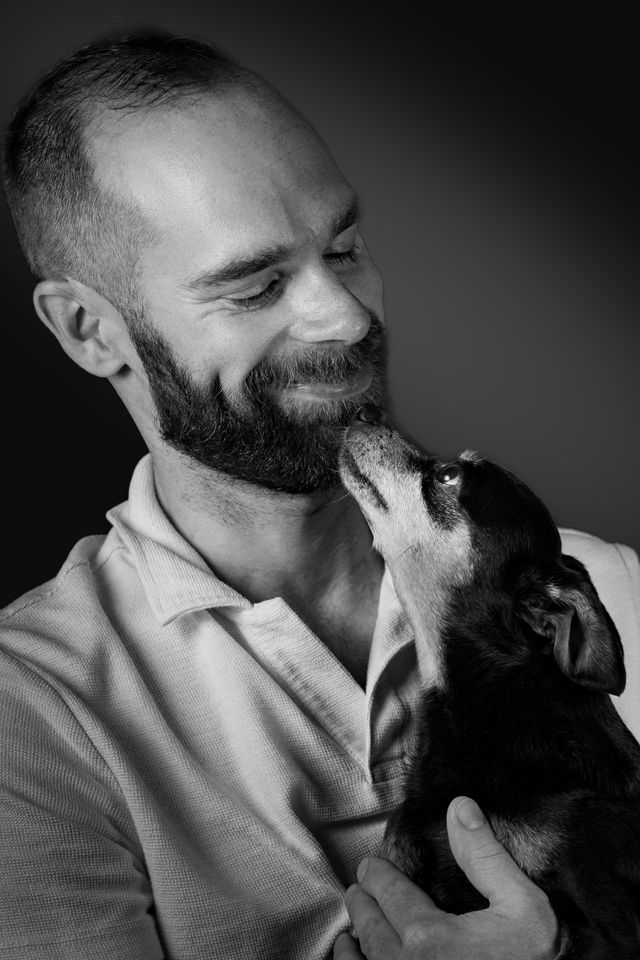
For healthy adults, an occasional lick on intact skin is unlikely to cause a problem, but dogs' mouths can carry microorganisms, and veterinarians generally advise against allowing dogs to lick the mouth, nose or eyes.
If there are young children, elderly people, or people with weakened immune systems in the household, being more cautious makes sense.
And there is an easy compromise: if you enjoy the interaction, let your dog lick your hand instead and wash your hands afterward.
When licking deserves more attention
Occasional licking is usually not something to worry about. A sudden change is different.
If your dog becomes unusually fixated on licking you, objects, surfaces, or themselves, pay attention to what else has changed. Excessive licking can sometimes be associated with anxiety, boredom, pain, allergies or another medical problem.
The VCA Animal Hospitals notes that excessive licking can sometimes have behavioral or medical causes and recommends veterinary attention when the behavior becomes excessive or concerning.
The key isn't counting how many times your dog licks you. It's noticing whether the behavior is suddenly different, difficult to interrupt, or accompanied by other changes.
Your dog's lick doesn't come with a single translation
A dog licking your face can mean affection. It can also mean attention, curiosity, an interesting taste, social communication—or simply that licking has become a rewarding habit.
That's what makes dog behavior so interesting: the same action can have different meanings depending on what happens before and after it.
So next time your dog reaches for your face with that unmistakable tongue, look beyond the lick itself. Ask what happened just before it, how your dog is carrying their body, and what they get from your reaction.
Sometimes the answer really is affection.
Sometimes you're just salty.
And sometimes your dog has figured out that one tiny lick is the fastest way to make you put your phone down and pay attention.
FAQ
Why does my dog lick my face when I come home?
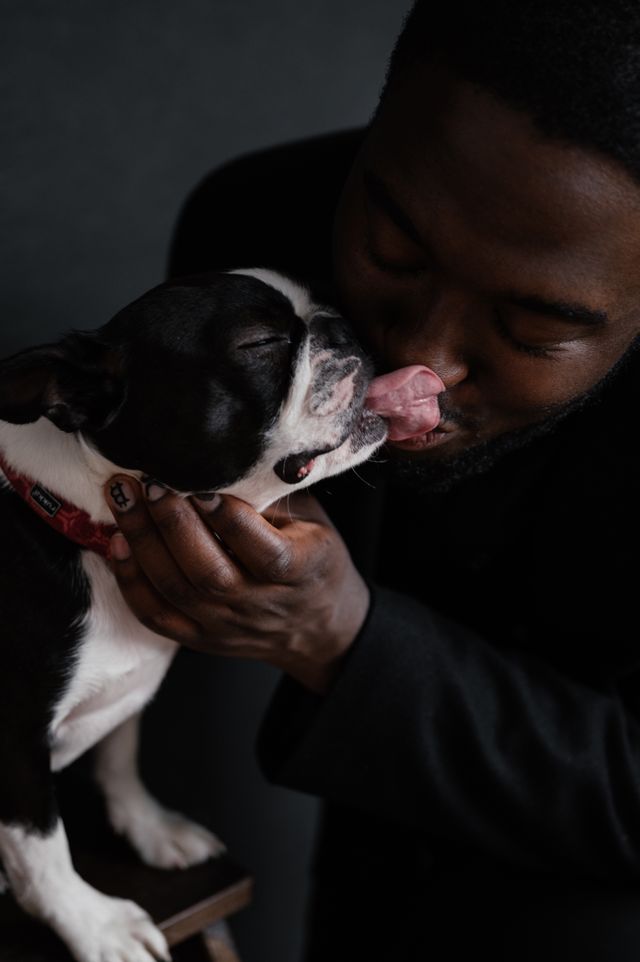
Greeting behavior may be part of the reason. Dogs can use licking as a social interaction, and your arrival may trigger excitement and a desire for contact.
Why does my dog lick my hands after I eat?
Your hands may carry interesting food smells or traces of flavor. Licking can be a simple form of investigation rather than a sign that something is wrong.
Does licking always mean my dog loves me?
No. Licking can occur for several reasons, including social interaction, attention seeking, curiosity and taste. The surrounding body language gives you more information than the licking alone.
Should I stop my dog from licking my face?
You can, especially if you prefer not to have your face licked. Redirecting your dog calmly to another behavior is generally more useful than punishing them.
When should excessive licking concern me?
A sudden or persistent increase in licking—especially when your dog also seems uncomfortable, anxious, painful, itchy, or focused on licking themselves or objects—deserves attention. A veterinarian can help rule out an underlying medical problem.